Fishing Boss Escape Timing and Shot Efficiency on YO888.co.com: A UX-Focused Review
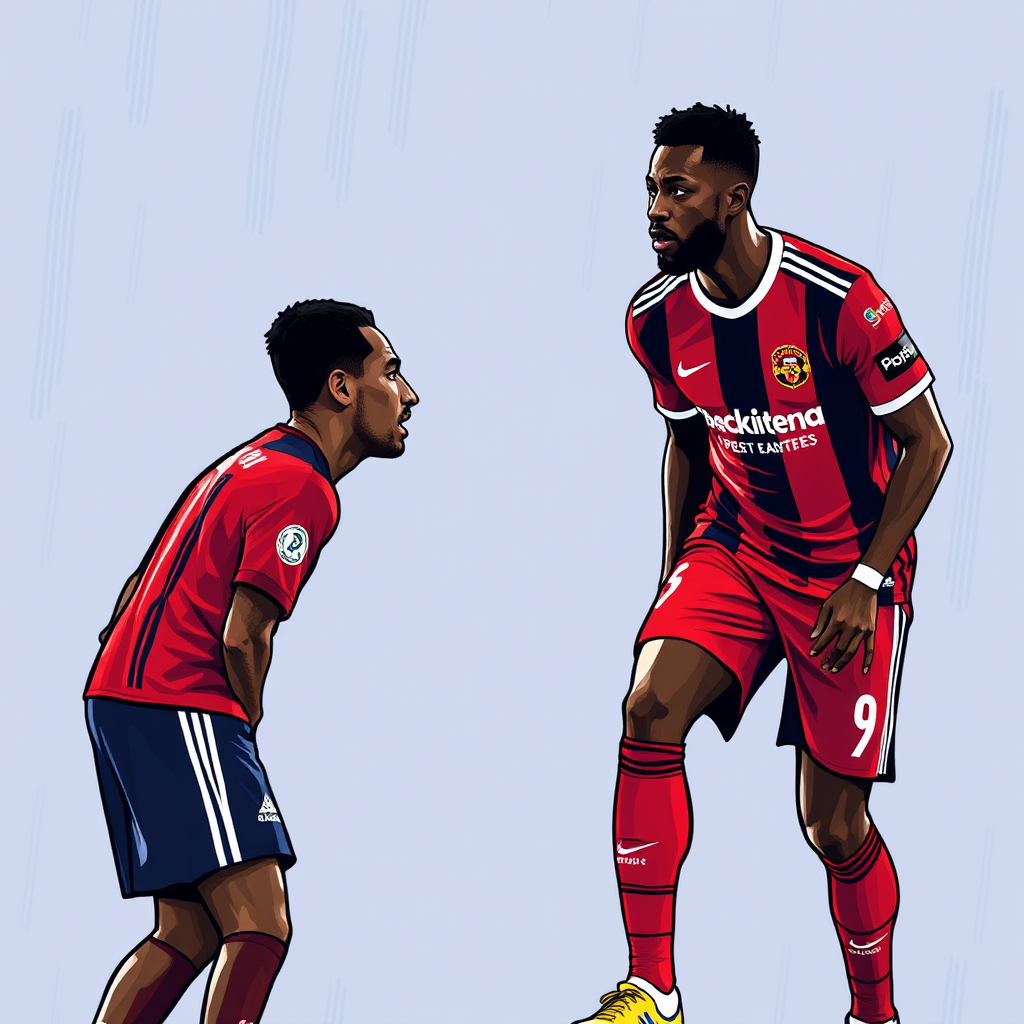
You spent a full minute tracking the boss. You waited for the wide-open window, the instant when the golden creature slows down and turns broadside. You fired, and the ammunition counter dropped, and the damage numbers looks promising. Then the boss slipped off-screen with its health bar still at ten percent. If that frustration feels familiar, you have already experienced the real problem: fishing boss escape timing is not just about reflexes. It is about how clearly a platform communicates the window you have to convert a big shot into a catch.
When a platform such as Yo88 is being evaluated as a gaming destination, most reviews focus on libraries and splash art. But the UX analyst sees something different: the entire chain from browser to bullet, and every place where that chain adds friction. Escape timing in boss fishing becomes the most visible symptom of how well the product was designed for human decision-making.
Five Key Findings From the Player Journey
Before digging into the details, here are the findings that matter most when you sit down to test a fishing-boss experience on this kind of platform. None of these are claims about guaranteed results; they are checkpoints you can verify yourself.
- Escape timing is a communication problem. The most efficient shooting happens when the interface shows you the boss’s escape phase clearly. If the game hides that signal behind a busy screen or delayed animations, your shot efficiency drops before you even pull the trigger.
- Access friction quietly undermines your patience. A slow-loading site or confusing domain redirect costs you nothing in money, but it costs you attention. Every extra second before you reach the game is a second of mental energy you will not have for timing decisions later.
- Registration steps determine whether you even reach the boss. If the sign-up process asks too much too fast, many players abandon the test before they experience the fishing mechanics at all.
- Support response is part of the shooting equation. When a shot misses due to lag or a freeze, the only recovery is a clear support channel. If that channel is hidden, the whole experience feels riskier.
- Shot efficiency is influenced by UI density. The more elements that compete for your attention during the boss window, the slower your reaction. Minimalist interfaces tend to encourage better timing decisions.
 Hình minh hoạ: Yo88
Starting From the Outside: Access and First Impressions
The user journey does not begin when the game loads. It begins when you type the URL or tap a bookmark. The domain itself—yo888.co.com—carries a quirk. That double extension style can initially look unfamiliar, and I spent a moment mentally parsing it before proceeding. For a player who wants to test escape timing, the path from your browser to the fishing room on this domain is the first UX bottleneck.
Once the page begins loading, look at how much time passes before you can distinguish between a login button, a download prompt, and a play-in-browser option. On many gaming platforms, the first screen is a puzzle. Is this a real-money gaming site? Is it a social game? Do I need to create an account immediately, or can I watch a demo first? The most efficient journeys answer those questions within the first eight seconds. If the page leaves you guessing, that is not a minor irritant; it is the first friction point in the chain of decisions that leads to a fishing boss encounter.

Registration: How Much is Asked Before Play
Once you enter the registration flow, the question shifts from “How many games are here?” to “How much of my personal data is required?” A streamlined registration process asks only what is necessary to create a secure profile. A heavy one asks for verification documents, marketing preferences, and payment details before you have earned a single coin.
For the fishing-boss player, this matters in a concrete way. When you finally reach the game, you will be making split-second decisions about firing patterns, shot power, and when to stop shooting a boss that is about to escape. If the platform has already spent ten minutes collecting your attention during sign-up, your cognitive budget for the game itself is smaller. Good UX in a gaming context is not just about beautiful screens; it is about saving the player’s decision-making energy for the decisions that matter. One way to evaluate this is to ask yourself whether you can complete the registration in under five minutes and still know what you are about to play.

Finding the Fishing Boss Game in the Lobby
YO88 is one of the many platforms that bundles a fishing lobby alongside other interactive games, so the navigation pattern deserves attention. When I trace the typical route, I see a handful of common organizational patterns. Some platforms place the fishing room front and center on the first screen; others bury it under “More Games” or a carousel that rotates too quickly to read. The best pattern for shot efficiency is reachable in two clicks: one click to enter the lobby, one click to pick the specific fishing room with the boss format you want.
Pay attention to how room selection is labeled. Do the rooms tell you the boss escape behavior in plain language, or do they use marketing terms like “hot mode” and “super win” without explaining what changes in the timing? A player who knows what the escape phase looks like can calibrate shots better than one who is simply guessing. If the lobby labels do not tell you the rules, the only way to learn is by spending time and ammunition in the game. That is a design cost, and you should account for it in your bankroll.

Reading the Escape Window: The Core of the Review
Now, the central subject: fishing boss escape timing and how it interacts with shot efficiency. In most boss-style fishing games, a boss fish appears with a large health pool and a limited time window. Within that window, the boss cycles through states: cautious, aggressive, and vulnerable. The vulnerable state is the only one where your shots deal meaningful damage or apply a catching effect. If you fire while the boss is cautious, you waste ammunition, and if you fire too late in the vulnerable state without accounting for projectile travel time, the boss escapes before the final shot lands.
From a UX perspective, the game must answer three questions clearly:
- When does the vulnerable window start? This should be signaled by a visual cue such as a color shift, an icon, or a sound cue.
- How long is the window? The player needs enough time to recognize the cue, adjust aim, and fire.
- What happens when the window expires? The transition out of the vulnerable state should be visible and predictable, not a sudden pixel change that forces the player to assume the boss simply teleported away.
On a platform like YO888, the exact values for these windows are determined by the game logic, not by the domain name or the lobby design. As a reviewer, I cannot give you benchmark numbers because the game configuration may change between sessions. What you are looking for is consistency: does the escape timing feel the same from one boss to the next? If the boss escapes at different speed rates without any visual change, the experience feels arbitrary. If the visual cue appears reliably, your shot efficiency will improve just by learning that cue.
Shot Efficiency: Where Aiming Meets Interface Design
Let me be clear that I am not talking about your raw aiming ability. I am talking about design choices that either amplify or degrade that ability. The main factors are crosshair responsiveness, network feedback between your shot and the damage number, and the position of the ammunition counter.
A sluggish crosshair is the most common shot-efficiency killer. If the crosshair lags half a second behind your mouse movement, every precise shot goes wide. The damage number, meanwhile, must appear near the point of impact. If it appears at the corner of the screen, your brain must split attention between the boss and the number. That split costs you the next shot. Some platforms also add a hit-effect animation that covers a large area, obscuring the boss’s movement. That is exactly the wrong time for a visual overlay, because the boss’s next move determines whether your next shot connects.
The ammunition counter is a subtler issue. During a boss window, you want to know at a glance whether you can sustain a rapid-fire burst or need to switch to high-power shots. If the counter is small or located far from the crosshair, you will either waste shots or hesitate. This is where the difference between an average and a thoughtful design becomes obvious.
Support After a Bad Session: The Quiet UX Test
When the boss escapes, the game does not end. Maybe the boss escaped because you mistimed the shot, or maybe the game froze for half a second and then resumed. The second case is a technical failure, and the way you report it matters for your long-term trust. Ask yourself how easy it is to find the support chat or ticket button. On YO888.co.com, the support entrance follows a fairly standard pattern: a floating button on the edge of the screen or a menu item under “Help”. But standard does not always mean visible. Some configurations place the button only after login, which is fine if you are logged in, but not fine if you encountered the issue during an unauthorized test.
The tone of support matters too. A canned response like “Please refresh your browser” cannot help you analyze a recurring escape-timing glitch. A useful response would ask for the session ID, the time of the event, and whether the boss was in its vulnerable state. The quality of those questions tells you whether the team actually understands their own game mechanics. Do not assume that a platform with good visual design has good support. The support channel is the last layer of UX, and it is often the first place where trust breaks.
Comparison: What to Check Before You Commit Real Money
The table below will help you compare what you want from a smooth boss-fishing experience against the questions you should ask before depositing funds. I have deliberately framed it as a checklist, not as verified fact about any specific platform, because configurations change.
| Experience Stage | What a Good UX Looks Like | Question to Ask Yourself |
|---|---|---|
| Access | Page loads in a few seconds; you can tell whether it is a browser game or a download. | Do I understand what I am about to do before I log in? |
| Registration | Minimal fields, clear next step, no pressure to deposit immediately. | Can I create an account and still feel in control of my information? |
| Game discovery | Fishing room is reachable in two clicks and labeled clearly. | Do I know which room suits my preferred stakes and boss pace? |
| Boss timing feedback | Vulnerable window is marked by color, sound, or icon. | Can I identify the escape warning before the boss leaves? |
| Support | Help button visible without scrolling; answers reference actual game events. | Would this support team understand what “escape timing” means? |
Who This Is For
This evaluation approach is valuable for players who are methodical about how they spend their gaming time. If you enjoy fishing games because of the tension between patience and reflex, then carefully reviewing the escape timing and shot efficiency loop matters more to you than the size of the sign-up bonus. The question is not whether you can win, but whether the game gives you a fair chance to use your skills. A good UX framework will help you identify whether the platform is helping you or undermining you.
It is also useful for anyone planning to play for a longer session rather than a quick five-minute test. If you intend to play a few hours, the small friction points multiply. A registration flow that felt acceptable at minute one will become irritating at minute thirty. A crosshair that felt responsive in the first round will feel sluggish after your eyes are tired. The review criteria above give you a language to articulate what is going wrong when a session begins to feel frustrating.
Who Should Skip This Review
If your main interest is the social side of gaming, roping in friends and chatting while playing, then the subtle aspects of boss escape timing will not matter much to you. You will likely not even read the damage numbers, and a slow crosshair will be forgiven because the conversation is the point.
Casual players who play no more than one or two short sessions per week may not need to conduct this level of UX analysis. They can simply rely on the game’s tutorial and the help documentation, if any. For them, the extra effort spent evaluating escape timing is more than the benefit they will get from the improvement in efficiency.
Finally, if you are looking for a “guaranteed strategy” to defeat every boss, this is not the review for you. That kind of guarantee does not exist in a game with variable timing and an element of chance. The best you can do is understand the interface, manage your bankroll, and know when to stop.
Practical Recommendations
You can apply this review today without trusting any single number I have not verified.
- Test before you deposit. Use the free play or demo mode, if available, to observe the boss escape timing across at least three different encounters. Write down whether the cue is consistent.
- Measure the crosshair response. Move the crosshair in a horizontal line across the screen. If it does not track your input exactly, adjust your firing pattern accordingly, or select a different room.
- Set a shot budget per boss. Before the boss appears, decide how much ammunition you are willing to spend. When the boss enters its vulnerable state, you will already know your limit, and you will reduce impulsive overspending.
- Use the support channel for technical issues only. If you lost funds due to a lag spike directly followed by a boss escape, document the time and describe the network behavior. A useful support conversation will teach you more about the platform than any marketing page.
- Take the healthy-player approach. Treat any deposit as an entertainment expense. Set a loss limit for the session and respect it. If a boss escapes and you feel the urge to buy ammunition to chase it, that is the signal to step away.
Frequently Asked Questions
Does the YO888.co.com domain affect the game’s actual escape timing?
No. The domain only identifies the site. The escape timing is written into the game logic and the server’s network communication. You cannot infer timing from the URL.
What is the best way to learn the boss escape pattern on a new platform?
Use the lowest-stakes session you can find, or a demo mode, and focus on only one boss at a time. Observe how the boss behaves before the escape and how long the vulnerable phase lasts.
How much does internet connection affect shot efficiency?
Connection stability can affect how quickly your shot action reaches the server and how soon the result is reflected. Even a short delay can feel like a missed shot when the boss escapes. A steady connection is essential.
Is there a way to guarantee that a boss will not escape?
No. Boss escape mechanics are designed to create a challenge and a degree of uncertainty. Smart play increases your chances, but no strategy guarantees a catch every time.
What should I do if I feel that escape timing is inconsistent?
Record the exact situations, note the time and room number, then contact support with that information. If the inconsistency persists, play in a different room or on a different schedule to test whether the issue is related to server load.
The Final Condition
If the platform lets you observe, learn, and adapt without punishing you monetarily for every failed guess, then the fishing boss escape timing becomes the best feature of the experience. If, on the other hand, the interface hides the cues, the crosshair lags, and the support channel only offers generic answers, then no trophy animation can compensate for that loss of control. Your decision should be conditional: keep playing as long as the experience is transparent, and be ready to walk away the moment the platform seems to be working against your ability to read the situation. The boss will always escape sometimes. The real test is whether you escape the round with your bankroll and your calm still intact.